

Introduction
Systematic random sampling is a widely used sampling method that combines simplicity with a structured approach to selecting participants.
It is often used in surveys and research when you need a representative sample without the complexity of fully random selection.
In this guide, you will learn what systematic random sampling is, how it works, and when to use it, along with practical examples.
What Is Systematic Random Sampling?
Systematic random sampling is a probability sampling method where you select elements from a population at regular intervals, starting from a randomly chosen point.
This method ensures that every member of the population has an equal chance of being selected, while maintaining a simple selection process.
Simple example:
If you want to select 100 people from a list of 1,000, you choose every 10th person after selecting a random starting point.

How Systematic Random Sampling Works
The process follows a clear and structured approach.
Step-by-step process:
- Define the population
Identify the full group you want to study - Determine the sample size
Decide how many participants you need - Calculate the sampling interval
Divide the population size by the sample size - Select a random starting point
Choose a number between 1 and the interval - Select every nth element
Continue selecting based on the interval
Systematic Random Sampling Formula
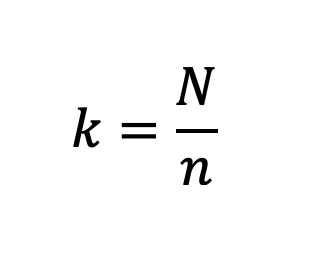
The sampling interval is calculated using a simple formula:
Where:
- N is the population size
- n is the sample size
- k is the sampling interval
Example of Systematic Random Sampling
Example 1: Customer database
A company has 2,000 customers and wants a sample of 200.
- Population size N = 2,000
- Sample size n = 200
- Interval k = 10
The researcher selects a random starting number between 1 and 10, then chooses every 10th customer.
Example 2: Manufacturing quality control
A factory inspects every 20th product coming off a production line after selecting a random starting point.
Advantages of Systematic Random Sampling
1. Easy to implement
Simple method that does not require complex tools.
2. Time-efficient
Faster than fully random sampling methods.
3. Even distribution
Samples are spread evenly across the population.

Disadvantages of Systematic Random Sampling
1. Risk of periodic bias
If the population has a hidden pattern, it can affect results.
2. Less flexible
Once the interval is set, selection follows a fixed pattern.
3. Requires ordered data
Works best when the population is structured in a list.
When to Use Systematic Random Sampling
This method is useful when you need a quick and structured way to select a sample.
Best use cases:
- Customer lists
- Survey sampling
- Quality control processes
- Large datasets
Systematic Random Sampling vs Systematic Sampling
| Feature | Systematic Random Sampling | Systematic Sampling |
| Starting point | Random | May or may not be random |
| Selection method | Every nth element | Every nth element |
| Randomness | Higher | Slightly lower |
| Complexity | Simple | Simple |
Key insight:
Systematic random sampling is a more rigorous version of systematic sampling because it always includes a random starting point.
Systematic Random Sampling vs Simple Random Sampling
| Feature | Systematic Random Sampling | Simple Random Sampling |
| Method | Interval-based selection | Fully random selection |
| Speed | Faster | Slower |
| Complexity | Lower | Higher |
| Bias risk | Moderate | Lower |
Common Mistakes to Avoid
1. Ignoring population patterns
Hidden patterns can bias results.
2. Choosing a non-random starting point
This reduces the sample’s validity.
3. Using incorrect intervals
Incorrect calculations lead to poor sampling.

FAQ: Systematic Random Sampling
What is systematic random sampling in simple terms?
It is a method where you select every nth item from a list after choosing a random starting point.
What is the difference between systematic and systematic random sampling?
Systematic random sampling always includes a random starting point, while systematic sampling may not.
When should you use systematic random sampling?
Use it when you need a simple and efficient way to select a representative sample from a large population.
Final Thoughts
Systematic random sampling is a practical and efficient method for selecting samples in research.
It offers a balance between simplicity and randomness, making it a popular choice in surveys and data collection.
By understanding how it works and when to use it, you can improve the quality and reliability of your research results.